
Events of the last few days prompted me to interrupt the flow of my "Military Insignia" project. As soon as the news hit the air - Osama bin Laden, the notorious Al-Qaeda leader, has been killed – I figured that this would be good time to expand my “Special Forces” collection, focusing on the insignias of those commands, units and agencies, which allegedly participated in the operation.
Of course, we will never know for sure how it all went down and who exactly carried it out and contributed to the operation – such details will remain heavily classified. However, here is the official version of the event.
On May 1/2 2011, the United States Naval Special Warfare Development Group (NSWDG), also known as DEVGRU or SEAL Team Six (ST6) , was involved in the operation codenamed "Geronimo", during which Osama bin Laden, leader of Al Qaeda and America's most wanted terrorist, was shot and killed at his compound in the affluent suburb of Abottabad, Pakistan. Modified MH-60 helicopters from the U.S. Army's 160th Special Operations Aviation Regiment, carried Navy SEALs and were supported by other personnel with tactical signals, intelligence collectors, and navigators using highly classified hyperspectral imagers from Ghazi Air Base in Pakistan.The operation was carried out with support of other Joint Special Operations Command (JSOC) units, the Technical Application Programs Office and the Aviation Technology Evaluation Group. The raid also involved close collaboration with the CIA, the National Security Agency (NSA), and the National Geospatial-Intelligence Agency.
DEVGRU, or SEAL Team Six, are the U.S. Navy's principal special operations force and is a part of the Naval Special Warfare Command (NSWC) as well as the maritime component of the United States Special Operations Command (USSOCOM) and United States Joint Special Operations Command (JSOC).
This was quite a few insignia to cover. Thankfully, some of them were created earlier, as part of my “Special Forces” stretch of the project, which I covered in detail in one of my earlier posts here. So, without further ado, meet the major players of the operation “Geronimo”, at least according to the official version of the event.

USSOCOM is the Unified Combatant Command charged with overseeing the various Special Operations Commands (SOC or SOCOM) of the Army, Air Force, Navy and Marine Corps of the United States armed forces. The command is part of the Department of Defense. USSOCOM is headquartered at MacDill Air Force Base in Tampa, Florida.
USSOCOM conducts several covert and clandestine missions, such as unconventional warfare, foreign internal defense, special reconnaissance, psychological operations, Civil Affairs, direct action, counter-terrorism and War on Drugs operations. Each branch has a Special Operations Command that is unique and capable of running its own operations, but when the different Special Operations Forces need to work together for an operation, USSOCOM becomes the joint component command of the operation, instead of a SOC of a specific branch.
 The Central Intelligence Agency (CIA) is a civilian intelligence agency of the United States government, reporting to the Director of National Intelligence, responsible for providing national security intelligence assessment to senior United States policymakers. The CIA also engages in covert activities at the request of the President of the United States.
It is the successor of the Office of Strategic Services (OSS) formed during World War II to coordinate espionage activities against the Axis Powers for the branches of the United States Armed Forces.
The primary function of the CIA is to collect information about foreign governments, corporations, and individuals, and to advise public policymakers. The agency conducts covert operations and paramilitary actions, and exerts foreign political influence through its Special Activities Division.
Sometimes, in government and military circles the CIA is indirectly referred to as Other Government Agencies (OGA), particularly when its operations in a particular area are an open secret. Other terms include The Company, Langley and The Agency.

The National Security Agency/Central Security Service (NSA/CSS) is a cryptologic intelligence agency of the United States Department of Defense responsible for the collection and analysis of foreign communications and foreign signals intelligence, as well as protecting U.S. government communications and information systems, which involves cryptanalysis and cryptography.
The NSA is directed by at least a lieutenant general or vice admiral. NSA is a key component of the U.S. Intelligence Community, which is headed by the Director of National Intelligence. The Central Security Service is a co-located agency created to coordinate intelligence activities and co-operation between NSA and other U.S. military cryptanalysis agencies. The Director of the NSA is also the Commander of the Joint Functional Component Command – Network Warfare. NSA's work is limited to communications intelligence; it does not perform field or human intelligence activities.
 The Central Security Service (CSS) is an agency of the United States Department of Defense, established in 1972 by a Presidential Directive to promote full partnership between the National Security Agency (NSA) and the Service Cryptologic Elements (SCE) of the United States Armed Forces.
The blue background of the CSS emblem represents "fidelity" and "steadfastness", with the symbols for the cryptologic service elements provided shown clockwise from top right as follows: Army Intelligence and Security Command, United States Marine Corps, Naval Security Group, United States Coast Guard and Air Force Intelligence, Surveillance and Reconnaissance Agency with the symbol of the National Security Agency in the center.
NSA/CSS was initially conceived as a separate "fourth service" beside the three U.S. armed services. The latter three resisted this idea, and therefore the CSS was founded as an inter-service organization. The day-to-day work of the CSS is to capture enemy signals (radar, telemetry, radio/satellite communications) using the means of the involved service. For example, the Navy has special submarines for tapping undersea cables; the Air Force operates aircraft with sophisticated antennas and processing gear to listen to enemy radar and radio; and on the ground, the Army operates similar eavesdropping equipment.

It is the successor of the Office of Strategic Services (OSS) formed during World War II to coordinate espionage activities against the Axis Powers for the branches of the United States Armed Forces.
The primary function of the CIA is to collect information about foreign governments, corporations, and individuals, and to advise public policymakers. The agency conducts covert operations and paramilitary actions, and exerts foreign political influence through its Special Activities Division.
Sometimes, in government and military circles the CIA is indirectly referred to as Other Government Agencies (OGA), particularly when its operations in a particular area are an open secret. Other terms include The Company, Langley and The Agency.

The National Security Agency/Central Security Service (NSA/CSS) is a cryptologic intelligence agency of the United States Department of Defense responsible for the collection and analysis of foreign communications and foreign signals intelligence, as well as protecting U.S. government communications and information systems, which involves cryptanalysis and cryptography.
The NSA is directed by at least a lieutenant general or vice admiral. NSA is a key component of the U.S. Intelligence Community, which is headed by the Director of National Intelligence. The Central Security Service is a co-located agency created to coordinate intelligence activities and co-operation between NSA and other U.S. military cryptanalysis agencies. The Director of the NSA is also the Commander of the Joint Functional Component Command – Network Warfare. NSA's work is limited to communications intelligence; it does not perform field or human intelligence activities.

The blue background of the CSS emblem represents "fidelity" and "steadfastness", with the symbols for the cryptologic service elements provided shown clockwise from top right as follows: Army Intelligence and Security Command, United States Marine Corps, Naval Security Group, United States Coast Guard and Air Force Intelligence, Surveillance and Reconnaissance Agency with the symbol of the National Security Agency in the center.
NSA/CSS was initially conceived as a separate "fourth service" beside the three U.S. armed services. The latter three resisted this idea, and therefore the CSS was founded as an inter-service organization. The day-to-day work of the CSS is to capture enemy signals (radar, telemetry, radio/satellite communications) using the means of the involved service. For example, the Navy has special submarines for tapping undersea cables; the Air Force operates aircraft with sophisticated antennas and processing gear to listen to enemy radar and radio; and on the ground, the Army operates similar eavesdropping equipment.

Joint Special Operations Command (JSOC) is
a component command of the United States Special Operations Command (USSOCOM) and is charged to study special operations requirements and techniques to ensure interoperability and equipment standardization, plan and conduct special operations exercises and training, and develop Joint Special Operations Tactics. It was established in 1980 on recommendation of Col. Charlie Beckwith, in the aftermath of the failure of Operation Eagle Claw. It is located at Pope Army Air Field and Fort Bragg in North Carolina, USA. The Joint Special Operations Command (JSOC) also commands and controls the Special Mission Units (SMU) of United States Special Operations Command (USSOCOM). These units perform highly classified activities. So far, only three SMUs have been publicly disclosed: The Army's 1st Special Forces Operational Detachment - Delta, the Navy's Naval Special Warfare Development Group, and the Air Force's 24th Special Tactics Squadron. The Intelligence Support Activity is also under JSOC.
a component command of the United States Special Operations Command (USSOCOM) and is charged to study special operations requirements and techniques to ensure interoperability and equipment standardization, plan and conduct special operations exercises and training, and develop Joint Special Operations Tactics. It was established in 1980 on recommendation of Col. Charlie Beckwith, in the aftermath of the failure of Operation Eagle Claw. It is located at Pope Army Air Field and Fort Bragg in North Carolina, USA. The Joint Special Operations Command (JSOC) also commands and controls the Special Mission Units (SMU) of United States Special Operations Command (USSOCOM). These units perform highly classified activities. So far, only three SMUs have been publicly disclosed: The Army's 1st Special Forces Operational Detachment - Delta, the Navy's Naval Special Warfare Development Group, and the Air Force's 24th Special Tactics Squadron. The Intelligence Support Activity is also under JSOC.
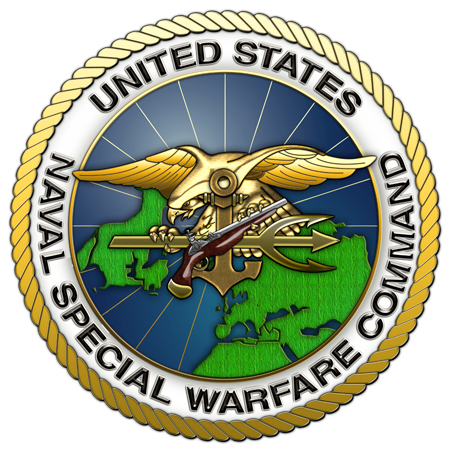
NSW is committed to combating the global terrorist threats. In addition to being experts in special reconnaissance and direct action missions, the skill sets needed to combat terrorism; NSW is postured to fight a dispersed enemy on their turf. NSW forces can operate from forward-deployed Navy ships, submarines and aviation mobility platforms as well as overseas bases and its own overseas units.

The United States Navy SEa, Air and Land (SEAL) Teams, commonly known as Navy SEALs, are the U.S. Navy's principal special operations force and are part of the Naval Special Warfare Command (NSWC) as well as the maritime component of the United States Special Operations Command (USSOCOM).
The unit's acronym ("SEAL") is derived from their capacity to operate at sea, in the air, and on land – but it is their ability to work underwater that separates SEALs from most other military units in the world. The experience gained from operating in the ocean and freshwater battlefields has shaped their identity and, as a result, they are regarded as being amongst the most highly skilled and trained amphibious units in the world. Navy SEALs are trained and have been deployed in a wide variety of missions, including direct action and special reconnaissance operations, unconventional warfare, foreign internal defense, hostage rescue, counter-terrorism, and other missions. Without exception, all SEALs are male members of either the United States Navy or the United States Marine Corps.

Most recently DEVGRU's designation had been changed by the Defense Department to a new name. However, the new name is currently classified.
When SEAL Team Six was first created it was devoted exclusively to counter-terrorism with a worldwide maritime responsibility; its objectives typically included targets such as ships, oil rigs, naval bases, or other civilian or military bases that were accessible from the sea or inland waterways.

DEVGRU's full mission is classified but is thought to include preemptive, pro-active counterterrorist operations, counter-proliferation (efforts to prevent the spread of both conventional weapons and weapons of mass destruction), as well as assassination or recovery of high-value targets (HVTs) from unfriendly nations. DEVGRU is one of only a handful of U.S. special mission units authorized to use preemptive actions against terrorists and their facilities.
160th Special Operations Aviation Regiment (Airborne)


NGA's headquarters are located in Bethesda, Maryland and operates major facilities in the Northern Virginia, Washington, D.C., and St. Louis, Missouri areas as well as support and liaison offices worldwide. In 2011 NGA expects to consolidate many of its regional activities as part of the BRAC in a new campus near Ft. Belvoir in Fairfax County, Virginia, which will become the third-largest government building in the Washington Metropolitan Area. Its budget and number of employees are classified.
The NGA was credited by White House and military officials with providing critical information in support of Operation Geronimo on May 2, 2011.
To active duty or reserve military personnel, veterans and their family members: I grant an explicit permission to download the above images to be used for non-profit/non-commercial and charitable causes, benefiting troops and their families, as well as for non-commercial internal duty-specific purposes, such as unit website design, training materials and presentations.
Information provided in part by NationalJournal.com, POLITICO.com, The Institute of Heraldry, Wikipedia, and particular unit’s websites.


+%5BSSI+DUI+CSIB%5D%5BSE%5D%5B1.5%5D.png)
