Pages

Showing posts with label special operations. Show all posts

Friday, September 21, 2018

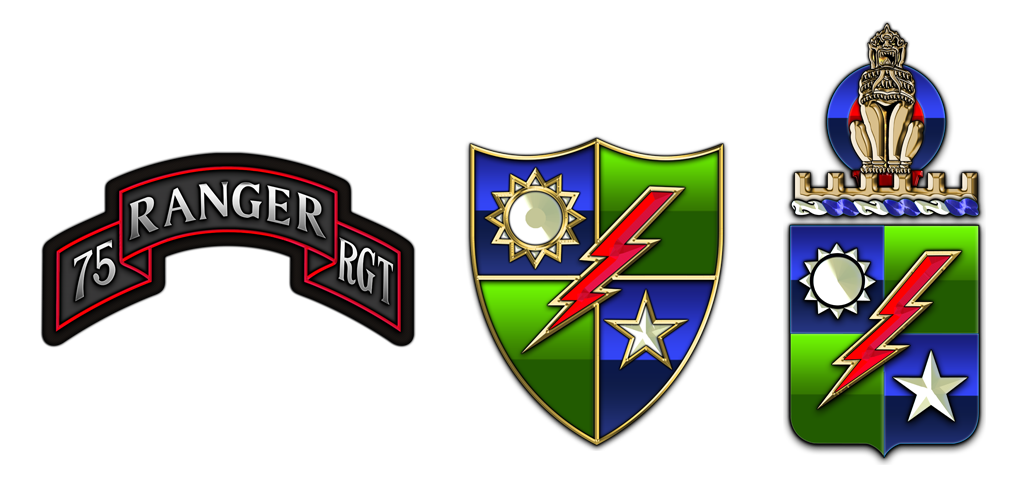
75th Ranger Regiment


The 75th Ranger Regiment, also known as Army Rangers, is a light infantry airborne special operations force that is part of the United States Army Special Operations Command. The Regiment is headquartered at Fort Benning, Georgia and is composed of one special troops battalion and three Ranger battalions. The primary mission of the Regiment is to conduct direct action raids in hostile or sensitive environments worldwide, often killing or capturing high value targets.
The 75th Ranger Regiment is the U.S. Army's premier light infantry unit, with specialized skills that enable the Regiment to perform a variety of missions. Besides direct action raids, these include: Airfield seizure, special reconnaissance, personnel recovery, clandestine insertion, and site exploitation. The Regiment can deploy one Ranger battalion within 18 hours of alert notification.

The 1st Ranger Battalion, currently based at Hunter Army Airfield in Savannah, Georgia, United States, is the first of three ranger battalions belonging to the United States Army's 75th Ranger Regiment.
It was originally formed shortly after the United States' entry into World War II and was modeled after the British Commandos during the war. Members from the unit were the first American soldiers to see combat in the European theater when they participated in the failed raid on Dieppe in France in 1942, during which three Rangers were killed and several more were captured. Later, the 1st Ranger Battalion was sent to North Africa where they participated in the landings in Algeria and the fighting in Tunisia in 1943. Also in 1943 the unit provided cadre for two more Ranger battalions created between the campaigns in Sicily and Italy. After World War II, the 1st Ranger Battalion has gone through a number of changes of name and composition as it has been activated, deactivated and reorganized on a number of occasions. However, the unit has lived on in one form or another since then, serving in the Korean and Vietnam Wars before being consolidated into the 75th Ranger Regiment of which it is a part today. Recent deployments have included operations in both Iraq and Afghanistan as part of the wider global war on terrorism.

The 2nd Ranger Battalion, currently based at Joint Base Lewis-McChord south of Seattle, Washington, United States, is the second of three ranger battalions belonging to the United States Army's 75th Ranger Regiment. Primary tasks include: direct action, national and international emergency crisis response, airborne & air assault operations, special reconnaissance, intelligence & counter intelligence, combat search and rescue, personnel recovery & hostage rescue, joint special operations, and counter terrorism.

The 3rd Ranger Battalion, currently based at Fort Benning, Georgia, is the third of three ranger battalions belonging to the United States Army's 75th Ranger Regiment. Recent deployments have included Somalia as part of Task Force Ranger, as well as operations in both Iraq and Afghanistan.

To active duty or reserve military personnel, veterans and their family members: I grant an explicit permission to download the above images to be used for non-profit/non-commercial and charitable causes, benefiting troops and their families, as well as for non-commercial internal duty-specific purposes, such as unit website design, training materials and presentations. Please, contact me for any other intended use.


As always, my artwork featuring the insignia can be found in my “Military Insignia” galleries at FineArt America and RedBubble


The above information provided in part by Wikipedia, The Institute of Heraldry, Global Security, and the official websites of the corresponding units and formations.

Sunday, April 30, 2017

U.S. Army Special Forces Groups


The 1st Special Forces Group is a U.S. Army Special Forces unit subordinate to the United States Pacific Command (USPACOM) and the Special Operations Command, Pacific (SOCPAC). The group was activated on 24 June 1957 at Camp Drake, Japan. It was among the first groups of the Special Forces to be officially formed. The group is responsible for operations in the Pacific. Currently, the First Battalion is stationed at Okinawa while the 2d, 3d, and 4th Battalions are stationed at Joint Base Lewis-McChord, Washington with a 4th Battalion standing up in the summer of 2009. 1st Special Forces Group holds the distinction of having the first, Captain Harry Cramer killed 21 October 1957, and last, SGT Fred Mick killed 12 October 1972, Special Forces men killed in Vietnam, as well as the first man, SFC Nathan Chapman killed 4 January 2002, in Afghanistan. Captain Cramer's name was left off the Vietnam Memorial when it was opened in 1982 due to the secretive nature of his mission and that the extent of America's involvement in Southeast Asia was not known in 1957. However, his son appealed to the National Parks Service and in 1983 Captain Cramer's name was added to the Memorial.
Throughout 2003–2004, the 1st SFG (A) deployed many soldiers in support of OPERATION IRAQI FREEDOM and OPERATION ENDURING FREEDOM in Afghanistan. By November 2004 the unit deployed an entire battalion to Afghanistan as part of the Combined Joint Special Operations Task Force- Afghanistan (CJSOTF-A).
Today, 1st SFG (A) continues to support the Global War on Terrorism with operations in the Philippines, Iraq and Afghanistan as well as maintaining US security relationships with partner nations throughout the Pacific.


The 3rd Special Forces Group (Airborne) – abbreviated 3rd SFG(A) and often called simply "3rd Group" – is a U.S. Army Special Forces (SF) unit active in the Vietnam Era (1963–69) and reactivated in 1990. It is subordinate of the United States Central Command (USCENTCOM) and the United States Special Operations Command Central (USSOCCENT or SOCCENT). Its area of operations (AO) is now Sub-Saharan Africa. 3rd Group was first activated on 5 December 1963 at Fort Bragg, North Carolina. The four colors of the quadrants of 3rd Group's distinctive unit flash derive from the flashes of the pre-existing SF units from which members were initially drawn. These colors are (clockwise from upper left): yellow (1st SFG (A)), red (7th SFG (A)), black (5th SFG (A)), and white (Special Forces Training Group (A)).
3rd Group had a Mideast and Africa orientation during the 1960s. It also supported 5th Group operations in Vietnam, losing the 403rd Army Security Agency Special Operations Detachment and the 19th PSYOP Company to 5th Group in 1966. With the "vietnamization" of the conflict in Southeast Asia, 3rd Group was deactivated in 1969 and members transferred back to various other SF groups. 3rd Group was reactivated in 1990 and, until the mid '90s, was given responsibility for the Caribbean as well as the western part of Africa. At the outbreak of the Persian Gulf War (August 1990), 3rd Group had only one functioning battalion (1st BN). This battalion deployed to Dhahran, Saudi Arabia, for three months, during which time it sent detachments forward into denied areas of Iraq and Kuwait for reconnaissance and sabotage missions. Ultimately, in late February 1991, it was given the mission of securing and occupying the U.S. Embassy in Kuwait City. The 2nd BN and 3rd BN of 3rd Group were reactivated in 1991 and 1992, respectively. 3rd Group took part in the restoration of democracy in Haiti in 1994. Since the mid 2000s 3rd Group's area of responsibility has primarily been Afghanistan, Pakistan, and Central Asia.


The 5th Special Forces Group is a United States Army Special Forces unit that was activated on 21 September 1961 during the Cold War. It is subordinate to USCENTCOM and SOCCENT. The 5th SFG was first deployed as a battlefield advisory group for the Army of the Republic of Vietnam (ARVN). By February 1965, it was deployed as a mainstay battle force once the war was in full swing.
The 5th Special Forces Group (Airborne) added to its combat history during Operations Desert Shield and Desert Storm. In August 1990 the Group was called upon to conduct operations in Southwest Asia in response to the Iraqi invasion of Kuwait. During this crisis the Army's First Special Operations Task Force, (ARSOTF), consisting of elements of the 5th Special Forces Group (Airborne) comprising 106 special operations teams performing missions of  support to coalition warfare; conducting foreign internal defense missions with the Saudi Arabian Army, performing special reconnaissance, border surveillance, direct action, combat search and rescue missions; and advising and assisting a pan-Arab equivalent force larger than six U.S. divisions, as well as conducting civil-military operations training and liaison with the Kuwaitis. By 13 September 2001, the 5th Special Forces Group was ordered to stand up a forward headquarters to conduct operations in Afghanistan. On 19 October, Operational Detachment Alpha 555, 5th Special Forces Group (Airborne) was the first of several 5th Group teams to infiltrate into Afghanistan, and work with the Northern Alliance to bring down the Taliban government. During Operation Iraqi Freedom 5th SFG(A) assisted in the capture of Saddam Hussein, and were deployed throughout Iraq as part of Combined Joint Special Operations Task Force – Arabian Peninsula (CJSOTF-AP). They were responsible for the capture of many terrorist leaders in Iraq. The Tom Clancy's "Ghost Recon" series features U.S. Special Forces Group 5, 1st Battalion, Delta Company, known in the games as "The Ghosts."


The 6th Special Forces Group (Airborne) or 6th SFG (ABN)(also 6SFGA) has been active from 1963 to 1971. It was based at Ft. Bragg, North Carolina and assigned to Southwest Asia (Iraq, Iran, etc.) and Southeast Asia. Many of the 103 original Son Tay raider volunteers were from 6SFGA.


The 7th Special Forces Group, an operational unit of the United States Army Special Forces, was activated on 20 May 1960. It traces its lineage to the 1st Company, 1st Battalion, 1st Special Service Force. It is subordinate to USSOUTHCOM and SOCSOUTH. Its main mission is to conduct guerrilla operations and train friendly governments' armed forces in Central and South America. 7th Special Forces Group participated in Operation Urgent Fury in Grenada in 1983, as well as in Operation Just Cause in Panama in 1989. Since early 2002, the 7th SFG has deployed almost nonstop in support of Operation Enduring Freedom in Afghanistan. 7th SFG along with the 3rd Special Forces Group are the two SFGs responsible for conducting operations in Afghanistan. The Group has also deployed in support of Operation Iraqi Freedom numerous times, but not as often as Afghanistan. The 7th SFG has lost more SF soldiers in the Global War on Terrorism than any other SFG.


The 8th Special Forces Group of the United States Army was established in 1963 at Fort Gulick, Panama Canal Zone. The primary mission of the 8th Special Forces Group (Airborne) [(SFG(A)] was counter-insurgency training for the armies of Latin America. Some training was performed under the sponsorship of the School of the Americas, also located at Fort Gulick.
In May 1962, the advance party from Company D, 7th SFG(A) departed from Ft. Bragg, NC to Fort Gulick, Panama, at that time in the Panama Canal Zone, to establish the 8th SFG(A). Three months later, in August 1962, Major Melvin J. Sowards, Commander of Company D, 7th SFG(A) moved the main body of the company to the Canal Zone. They would be followed by augmentation detachments. Upon their arrival, the basic organization of the Special Action Force (SAF) was completed and Lieutenant Colonel Sawyer assumed command. The legendary Lieutenant Colonel Arthur D. Simons, aka "Bull", then took command of Company D, 7th SFG(A) 18 January 1963 and LTC Sawyer became the Executive Officer. On 12 April 1963, under the command of LTC Simons, the SAF elements of the 7th SFG(A) were officially redesignated, as authorized by the Department of the Army and the 8th SFG(A) was activated.
The 8th's full designation was 8th Special Forces Group (ABN), Special Action Force (SAF), Latin America. The 8th was the US Army's only full SAF. In addition to the two line Special Forces companies, the SAF included a Military Intelligence detachment, a Medical detachment, a Military Police detachment, an Engineer detachment, an Army Security Agency detachment, and a Psychological Operations battalion.
Special Forces at this time didn't use designators like "battalion". A Special Forces company (which later became a battalion) was commanded by a Lt. Colonel and was designated as a "C" team. The 8th had 2 "C" teams. Each "C" team had 3 "B" teams and each "B" team had 5 "A" teams. The 8th SAF also operated the NCO Academy, Airborne School and Underwater Operations School for the US Army Southern Command (USARSO). They also provided support for the Jungle Warfare School at Fort Sherman, later renamed the Jungle Operations Training Center to be politically correct.


The 10th Special Forces Group (Airborne) (10th SFG(A) or 10th Group) is an active duty United States Army Special Forces (SF) Group. The 10th Group is responsible for operations within the EUCOM area of responsibility, as part of the Special Operations Command, Europe (SOCEUR). 10th Group has also been involved in parts of Africa and the Middle East. In 2009, as part of a new SOCOM directive, the group is now also responsible for operations within the AFRICOM area of responsibility.
10th SFG(A) was formed on 19 June 1952, at Fort Bragg, North Carolina, under the command of Colonel Aaron Bank. The group was split in 1953, with one half being sent to Germany, while the other half remained at Fort Bragg to form the core of the 77th Special Forces Group. In 1968, the majority of the unit transferred to Fort Devens, Massachusetts, with the exception of 1st Battalion, which remained in Germany. Between 1994 and 1995, 10th SFG(A) moved to Fort Carson, Colorado, which remains its current home.
10th Group began training with unconventional warfare groups from friendly countries in the 1960s, beginning with NATO allies. The group has also trained various components of the militaries of several Middle Eastern countries, including Lebanon, Jordan, Yemen, Iran, as well as Kurdish tribesmen. Units of the 10th SFG(A) have participated in humanitarian missions to the Congo, Somalia, and Rwanda. 10th SFG(A) was deployed to Saudi Arabia in 1991 during the First Persian Gulf War. The 10th SFG has been heavily involved in the War on Terrorism, deploying to Georgia, North Africa, Afghanistan, and consistently to Iraq.


The 11th Special Forces Group (Airborne), US Army Reserve was attached to the 97th Army Reserve Command at Fort Meade, Maryland. For a number of years in the late 1960's, Miller Field, Staten Island, New York was home to the headquarters of the Army's 11th Special Forces Group.
In November 1990, the Department of Defense developed budget guidance that directed the inactivation of 3 Army National Guard and 3 Army Reserve Special Forces battalions. The Department of Defense subsequently rescinded the inactivation plans for the 3 Army Reserve battalions pending the results of the Command's joint mission analysis. Conferees for the 1993 Department of Defense Appropriations Act included in their report the expectation that the Army Special Operations Command would maintain existing Army National Guard Special Operations units through Fiscal Year 1993 and rejected any plan or initiative to expand the active component special operations forces to replace these National Guard units. The conferees further noted that in the Fiscal Year 1992 Defense Appropriations Act, Congress had limited any conversion of National Guard missions to the active components. The Command's analysis validated the need to inactivate the 6 battalions, in the 11th Special Forces Group (US Army Reserve) and 19th Special Forces Group (Utah Army National Guard). Instead, the 11th and 12th Special Forces Group (Airborne), both US Army Reserve units, were inactivated on 15 September 1995.


12th Special Forces Group was a US Army Reserve unit. In 1981 Soldiers with 1st Battalion, 7th Special Forces Group from Fort Bragg, North Carolina, jumped into Fort McCoy from 3 US Air Force C-130 Hercules aircraft. The 85 active-duty Green Berets were there to advise, assist and evaluate the reservists from 12th Special Forces Group.
In November 1990, the Department of Defense developed budget guidance that directed the inactivation of 3 Army National Guard and 3 Army Reserve Special Forces battalions. The Department of Defense subsequently rescinded the inactivation plans for the 3 Army Reserve battalions pending the results of the Command's joint mission analysis. Conferees for the 1993 Department of Defense Appropriations Act included in their report the expectation that the Army Special Operations Command would maintain existing Army National Guard Special Operations units through Fiscal Year 1993 and rejected any plan or initiative to expand the active component special operations forces to replace these National Guard units. The conferees further noted that in the Fiscal Year 1992 Defense Appropriations Act, Congress had limited any conversion of National Guard missions to the active components. The Command's analysis validated the need to inactivate the 6 battalions, in the 11th Special Forces Group (US Army Reserve) and 19th Special Forces Group (Utah Army National Guard). Instead, the 11th and 12th Special Forces Group (Airborne), both US Army Reserve units, were inactivated on 15 September 1995.


The 19th Special Forces Group is one of two National Guard groups of the United States Army Special Forces. Headquartered in Draper, Utah, with detachments in Washington, West Virginia, Ohio, Rhode Island, Colorado, California and Texas, the 19th SFG shares responsibility over Southwest Asia with the 5th Special Forces Group, and the Pacific with the 1st Special Forces Group. It is subordinate to USCENTCOM and SOCCENT. In April 2007, the 5th Battalion of 19th SFG and troops from the 2nd Battalion were called to Operation Iraqi Freedom. On September 2008, several units of the 19ths SFG were called to active duty (Operation Enduring Freedom XIII).


The 20th Special Forces Group (Airborne) or 20th SFG (ABN) is one of two Army National Guard groups for the United States Army Special Forces. It is headquartered in Birmingham, Alabama (and is thus part of the Alabama Army National Guard) and as part of the United States Southern Command has an area of responsibility covering 32 countries, including Latin America south of Mexico, the Caribbean, the Gulf of Mexico, and the southwestern Atlantic Ocean. The area is shared with the Eglin Air Force Base-based 7th Special Forces Group, which is the active Special Forces group responsible for the same region.
The 20th Special Forces Group has battalions from Alabama (1st Battalion), Mississippi (2nd Battalion), and Florida (3rd Battalion), with detachments in Roanoke Rapids, North Carolina; Chicago, Illinois; Glen Arm, Maryland; and Chicopee, Massachusetts. There is also a MI company located in Louisville, Kentucky.

Following the start of the Global War on Terror the 20th has been actively deployed to both Iraq and Afghanistan.


The above information provided in part by Wikipedia, The Institute of Heraldry, Global Security, and the official websites of the corresponding units and formations.

Thursday, December 30, 2010

Insignia of the United States Special Operations Command (USSOCOM) and subordinate Special Operations Commands (SOCs)


[Edited on Aug. 15, 2011] Just as I planned, I have managed to end this year with a creative bang. This time it was about tackling a substantial chunk of my “Military Insignia” project – US Special Operations. This involved recreating insignias of the United States Special Operations Command (USSOCOM) and all its major subordinate Special Operations Commands (SOCs). USSOCOM is the Unified Combatant Command charged with overseeing the various Special Operations Commands (SOC or SOCOM) of the Army, Air Force, Navy and Marine Corps of the United States armed forces. The command is part of the Department of Defense. USSOCOM is headquartered at MacDill Air Force Base in Tampa, Florida.
USSOCOM conducts several covert and clandestine missions, such as unconventional warfare, foreign internal defense, special reconnaissance, psychological operations, Civil Affairs, direct action, counter-terrorism and War on Drugs operations. Each branch has a Special Operations Command that is unique and capable of running its own operations, but when the different Special Operations Forces need to work together for an operation, USSOCOM becomes the joint component command of the operation, instead of a SOC of a specific branch.
This particular stage of the project was quite time-consuming, considering the expansive structure of the USSOCOM. 

To accomplish all of the above, I have set aside roughly a month-worth of time, planning to wrap it up by the year-end. The challenge was on, and I was up to it. As with all of my previous projects, I was using my own 
Multi-Layer Enhancement & Texturing Technique (or M-LETT 3D; I discuss it in detail in this post) method  to produce quality hi-resolution insignias. Occasionally, not very often, I couldn’t help but let out the artist within, yet I would manage to stay true to the official insignia specifications and color palettes.


The United States Army Special Operations Command (Airborne) (USASOC or ARSOC) is a command charged with overseeing the various Special Operations Forces (SOF) of the United States Army. The command is part of the United States Special Operations Command (USSOCOM); a larger command overseeing all the different SOF Commands of each branch of the U.S. military.


[Edited on Aug. 15, 2011]  Special Operations Command – Joint Capabilities (SOC-JC) was transferred to USSOCOM from the soon to be disestablished United States Joint Forces Command. It was formerly known as United States Special Operations Command Joint Forces Command (SOCJFCOM).

Primary Mission: SOC-JC trains conventional and SOF commanders and their staffs, supports USSOCOM international engagement training requirements, and supports implementation of capability solutions in order to improve strategic and operational warfighting readiness and joint interoperability. 

SOC-JC must also be prepared to support deployed Special Operations Joint Task Force (SOJTF) Headquarters (HQ).
As a joint sub-unified command under USSOCOM, SOC-JC’s core function is to enhance the interoperability of conventional and Special Operations Forces (SOF) commanders and staffs through robust strategic and operational level joint training. In coordination with the USSOCOM J3, J7/9 and Joint Special Operations University (JSOU), SOC-JC provides excellent training and support to the education for SOF and Conventional Forces (CF) worldwide. Additionally, SOC-JC supports the joint SOF capabilities development process while maintaining the flexibility to support emerging initiatives.


Joint Special Operations Command (JSOC)


The Joint Special Operations Command (JSOC) is a component command of the United States Special Operations Command (USSOCOM) and is charged to study special operations requirements and techniques to ensure interoperability and equipment standardization, plan and conduct special operations exercises and training, and develop Joint Special Operations Tactics. It was established in 1980 on recommendation of Col. Charlie Beckwith, in the aftermath of the failure of Operation Eagle Claw. It is located at Pope Army Air Field and Fort Bragg in North Carolina, USA. The Joint Special Operations Command (JSOC) also commands and controls the Special Mission Units (SMU) of United States Special Operations Command (USSOCOM). These units perform highly classified activities. So far, only three SMUs have been publicly disclosed: The Army's 1st Special Forces Operational Detachment - Delta, the Navy's Naval Special Warfare Development Group, and the Air Force's 24th Special Tactics Squadron. The Intelligence Support Activity is also under JSOC.


1st Special Forces Operational Detachment-Delta (Delta Force)

The Army 1st Special Forces Operational Detachment-Delta (1st SFOD-D) is one of the United States' secretive Tier One counter-terrorism and Special Mission Units. Commonly known as Delta, or Delta Force, it was formed under the designation 1st SFOD-D, and is officially referred to by the Department of Defense as Combat Applications Group (CAG). This unit is an elite Special Operations Force, and an Army Compartmented Element of the Joint Special Operations Command. Delta Force, along with its Navy counterpart DEVGRU, are the United States' primary counter-terrorism units.
The Army 1st Special Forces Operational Detachment-Delta (Combat Applications Group (CAG), Delta Force) is the first of the two primary counter-terrorist units of JSOC and SOCOM. Modeled after the British Special Operations force Special Air Service, Delta is arguably one of the best SOF in the world. This is because of Delta's stringent training and selection process. Delta recruits primarily from the most talented and highly skilled operators in the Army Special Forces and the 75th Ranger Regiment although CAG will take anyone and everyone that can pass their screening. Recruits must pass a rigid selection course before beginning training. Delta has received training from numerous U.S. government agencies and other tier one SOF and has created a curriculum based on this training and techniques that it has developed. Delta conducts clandestine and covert special operations all over the world. It specializes in counter-terrorism and hostage rescue operations. Delta Force's primary tasks are counter-terrorism, direct action, and national intervention operations, although it is an extremely versatile group capable of assuming many covert missions, including, but not limited to, rescuing hostages and raids.
Delta Force's structure is similar to the British 22 Special Air Service Regiment. There are three main operational squadrons:

A Squadron
B Squadron
C Squadron

These squadrons are based on the organization of the SAS "Sabre Squadron" and each contains 75 to 85 operators. Each sabre squadron is broken down into three troops, one Recce/Sniper troop, and two Direct Action/Assault troops, that can either operate in teams or in groups as small as four to six men.


Special Operations Command Central (SOCCENT)


Special Operations Command Central (SOCCENT) is a subordinate unified command of joint forces for the U.S. Central Command (USCENTCOM). It is responsible for planning special operations throughout the USCENTCOM area of responsibility (AOR), planning and conducting peacetime joint/combined special operations training exercises, and orchestrating command and control of peacetime and wartime special operations as directed.
The command is headquartered at MacDill Air Force Base in Tampa, Florida. SOCCENT FWD, Combined Forces Special Operations Component Command (CFSOCC), is located at Al Udeid in Qatar. The Command's motto is Molon labe (Greek for "Come and take them").
SOCCENT, operating with coalition partners as the CFSOCC, consists of two combined joint special operations task forces [CJSOTFs], one Combined Joint Special Operations Aviation Command, one joint psychological operations task force, one Naval Special Warfare Unit and three Special Operations command and control elements [SOCCEs]. The two CJSOTFs are CJSOTF-Arabian Peninsula, whose headquarters directs United States Army Special Forces, and CJSOTF Afghanistan. CJSOTF Afghanistan includes elements of the 7th Special Forces Group operating in southern provinces, including Kandahar, as Task Force 71.


Special Operations Command Europe (SOCEUR)


Special Operations Command Europe (SOCEUR) is a subordinate unified command of US European Command exercising operational control of theater Army, Navy, and Air Force Special Operation Forces (SOF).
SOCEUR is responsible to CDRUSEUCOM/SACEUR for SOF readiness, targeting, exercises, plans, joint and combined training, NATO/partnership activities, and execution of counterterrorism, peacetime and contingency operations.

Special Operations Command Pacific (SOCPAC)


Special Operations Command, Pacific (SOCPAC) is a is a sub-unified command of U.S. Southern Command and serves as the functional component for all special operation missions deployed throughout the Caribbean, Central and South America regions. SOCSOUTH is responsible for the planning and execution of all Special Operations Forces (SOF) within U.S. Southern Command's AOR to include: U.S. Army Special Forces (Green Berets), U.S. Naval Special Warfare Units (SEALs), U.S. Army and U.S. Air Force Special Operations Aviation, Civil Affairs and Psychological Operations forces. SOCSOUTH is a joint headquarters that commands, controls, and executes over 75 deployments per year with an average of 20 missions in 12 countries at any time. The command is composed of three permanently assigned operational units based in several locations within the southeastern United States. Typical SOCSOUTH Headquarters deployments include a rapid response for contingencies, exercises, and other missions, as directed by Commander, U.S. Southern Command.

Special Operations Command South (SOCSOUTH)


Special Operations Command South (SOCSOUTH) is a is a sub-unified command of U.S. Southern Command and serves as the functional component for all special operation missions deployed throughout the Caribbean, Central and South America regions. SOCSOUTH is responsible for the planning and execution of all Special Operations Forces (SOF) within U.S. Southern Command's AOR to include: U.S. Army Special Forces (Green Berets), U.S. Naval Special Warfare Units (SEALs), U.S. Army and U.S. Air Force Special Operations Aviation, Civil Affairs and Psychological Operations forces. SOCSOUTH is a joint headquarters that commands, controls, and executes over 75 deployments per year with an average of 20 missions in 12 countries at any time. The command is composed of three permanently assigned operational units based in several locations within the southeastern United States. Typical SOCSOUTH Headquarters deployments include a rapid response for contingencies, exercises, and other missions, as directed by Commander, U.S. Southern Command.


Special Operations Command, Korea (SOCKOR)


Special Operations Command, Korea (SOCKOR) is a United States military organization in South Korea that provides special forces to United States Forces Korea/United Nations Command/Combined Forces Command. During wartime, SOCKOR combines with the Korean Special Warfare Command to form the Combined Unconventional Warfare Task Force (CUWTF).
Special Operations Command Korea (SOCKOR), located at Camp Kim in Yongsan, Korea, is the theater Special Operations Command (SOC) responsible for special operations on the Korean peninsula and, when established, the Korean Theater of Operations (KTO).
Because of the unique command relationships in Korea, SOCKOR is the only theater SOC that is not a subordinate unified command. Established in 1988 as a functional component command of U.S. Forces, Korea (USFK), SOCKOR is the principal organization responsible for the integration of U.S. SOF in Korea. Its primary mission focus is simple: be ready to employ U.S. SOF and win, should war resume in Korea.


Special Operations Command, Africa (SOCAFRICA)


Special Operations Command, Africa (SOCAFRICA) is an airborne sub-unified command within the Special Operations Forces of U.S. Africa Command (AFRICOM). SOCAFRICA HQ is located at Kelley Barracks outside of Stuttgart, Germany.


United States Army Special Forces, also known as Green Berets, are a special operations force of the United States Army tasked with six primary missions: unconventional warfare, foreign internal defense, special reconnaissance, direct action, hostage rescue, and counter-terrorism. The first two emphasize language, cultural, and training skills in working with foreign troops. Other duties include combat search and rescue (CSAR), security assistance, peacekeeping, humanitarian assistance, humanitarian demining, counter-proliferation, psychological operations, manhunts, and counter-drug operations; other components of the United States Special Operations Command or other U.S. government activities may also specialize in these secondary areas.
Their official motto is De oppresso liber (Latin: To Liberate the Oppressed), a reference to one of their primary missions, training and advising foreign indigenous forces.


75th Ranger Regiment


The 75th Ranger Regiment (Airborne), also known as Rangers, is a Special Operations light infantry unit of the United States Army. The Regiment is headquartered in Fort Benning, Georgia with battalions in Fort Benning, Hunter Army Airfield and Joint Base Lewis-McChord. It operates as a special operations force of the United States Army Special Operations Command (USASOC).
The Regiment is composed of one Special Troops Battalion and three, organizationally identical, rapidly-deployable light infantry special operations battalions with specialized skills that enable them to perform a variety of special operations missions. These missions include but are not limited to airborne, air assault, and direct action operations, raids, infiltration and exfiltration by air, land or sea in addition to airfield seizure, recovery of personnel and special equipment, and support of general purpose forces (GPF). Each of the Regiment's three line battalions rotates as the "Ranger Ready Force". This battalion is at a constant readiness to deploy and is expected to be able to respond anywhere in the world within 18 hours.

United States Army Civil Affairs and Psychological Operations Command (Airborne)


The United States Army Civil Affairs and Psychological Operations Command (Airborne), or USACAPOC(A), was founded in 1985. USACAPOC(A) is composed mostly of U.S. Army Reserve Soldiers in units throughout the United States. Its total size is approximately 10,000 Soldiers, making up about 94 percent of the DoD's Civil Affairs forces and 71 percent of the DoD's Psychological Operations forces. It is headquartered at Fort Bragg, North Carolina. The current commander (2010) is Major General David N. Blackledge, who assumed command in September 2009, succeeding Major General David A. Morris who commanded the unit from 2007 to 2009.
Historically, USACAPOC(A) was one of four major subordinate commands comprising the U.S. Army Special Operations Command. In May 2006, the reserve component of USACAPOC(A) was transferred to the U.S. Army Reserve Command. The Army's active duty civil affairs and psychological operations units, along with the branches' training and doctrine, continues to fall under the U.S. Army Special Operations Command.
Army Reserve Civil Affairs and Psychological Operations make up 5 percent of the U.S. Army Reserve force, but account for about 20 percent of Army Reserve deployments.
Some proponents of USACAPOC(A) point to its units' success in humanitarian aid operations, and also in their ability to spread information to civilians. The command's special operators are some of the most highly trained soldiers in the U.S. Army, and bring civilian expertise not found among regular active duty Soldiers to the table. The projects they complete comprise many of the 'Good News' stories run in the American media each day about Iraq, Afghanistan and the Horn of Africa.


The next stages of this project will be focusing on Special Operations insignia of the US Navy, US Air Force and USMC. So far, there is no ETA on any of those. Stay Tuned.


To active duty or reserve military personnel, veterans and their family members: I grant an explicit permission to download the above images to be used for non-profit/non-commercial and charitable causes, benefiting troops and their families, as well as for non-commercial internal duty-specific purposes, such as unit website design, training materials and presentations. 


The above information provided in part by The Institute of Heraldry, Global Security, Wikipedia and websites of certain Unified Combatant Commands


Related Posts Plugin for WordPress, Blogger...